1. Principle and Structural Architecture
1.1 Definition and Compound Concept

(Stainless Steel Plate)
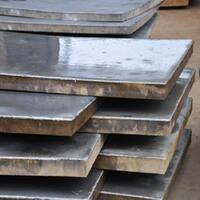
Stainless-steel outfitted plate is a bimetallic composite material including a carbon or low-alloy steel base layer metallurgically bound to a corrosion-resistant stainless steel cladding layer.
This crossbreed framework leverages the high stamina and cost-effectiveness of architectural steel with the exceptional chemical resistance, oxidation stability, and health residential properties of stainless steel.
The bond between the two layers is not merely mechanical however metallurgical– attained via processes such as hot rolling, explosion bonding, or diffusion welding– guaranteeing honesty under thermal biking, mechanical loading, and pressure differentials.
Regular cladding thicknesses range from 1.5 mm to 6 mm, representing 10– 20% of the complete plate thickness, which is sufficient to offer long-lasting corrosion security while minimizing product price.
Unlike finishings or cellular linings that can peel or use through, the metallurgical bond in clad plates makes sure that also if the surface is machined or bonded, the underlying interface remains robust and sealed.
This makes attired plate ideal for applications where both architectural load-bearing capacity and ecological resilience are vital, such as in chemical processing, oil refining, and marine facilities.
1.2 Historical Advancement and Industrial Fostering
The principle of steel cladding dates back to the very early 20th century, yet industrial-scale production of stainless-steel outfitted plate started in the 1950s with the increase of petrochemical and nuclear industries demanding economical corrosion-resistant materials.
Early approaches counted on explosive welding, where regulated ignition required two tidy steel surfaces into intimate contact at high velocity, developing a bumpy interfacial bond with outstanding shear toughness.
By the 1970s, warm roll bonding ended up being leading, incorporating cladding into constant steel mill operations: a stainless steel sheet is stacked atop a warmed carbon steel slab, after that gone through rolling mills under high stress and temperature (normally 1100– 1250 ° C), triggering atomic diffusion and permanent bonding.
Specifications such as ASTM A264 (for roll-bonded) and ASTM B898 (for explosive-bonded) currently regulate material specs, bond quality, and screening procedures.
Today, clothed plate accounts for a considerable share of pressure vessel and warm exchanger construction in sectors where full stainless building would certainly be much too costly.
Its adoption shows a critical engineering concession: providing > 90% of the deterioration efficiency of solid stainless-steel at roughly 30– 50% of the material cost.
2. Manufacturing Technologies and Bond Stability
2.1 Warm Roll Bonding Refine
Hot roll bonding is one of the most common commercial approach for generating large-format clothed plates.
( Stainless Steel Plate)
The process starts with thorough surface prep work: both the base steel and cladding sheet are descaled, degreased, and typically vacuum-sealed or tack-welded at sides to avoid oxidation throughout heating.
The stacked setting up is heated in a furnace to just below the melting point of the lower-melting part, permitting surface area oxides to break down and promoting atomic flexibility.
As the billet go through turning around moving mills, extreme plastic contortion separates residual oxides and pressures clean metal-to-metal call, enabling diffusion and recrystallization across the interface.
Post-rolling, the plate may undertake normalization or stress-relief annealing to homogenize microstructure and alleviate residual stress and anxieties.
The resulting bond shows shear strengths exceeding 200 MPa and stands up to ultrasonic testing, bend tests, and macroetch examination per ASTM demands, confirming absence of voids or unbonded areas.
2.2 Surge and Diffusion Bonding Alternatives
Surge bonding uses a precisely regulated detonation to speed up the cladding plate towards the base plate at speeds of 300– 800 m/s, creating localized plastic circulation and jetting that cleans and bonds the surfaces in microseconds.
This strategy excels for signing up with dissimilar or hard-to-weld metals (e.g., titanium to steel) and creates a particular sinusoidal interface that boosts mechanical interlock.
However, it is batch-based, minimal in plate size, and requires specialized safety protocols, making it much less cost-effective for high-volume applications.
Diffusion bonding, done under heat and stress in a vacuum cleaner or inert atmosphere, permits atomic interdiffusion without melting, generating a virtually seamless interface with marginal distortion.
While perfect for aerospace or nuclear parts requiring ultra-high purity, diffusion bonding is slow and pricey, limiting its use in mainstream commercial plate manufacturing.
Regardless of method, the vital metric is bond connection: any unbonded location larger than a few square millimeters can become a deterioration initiation website or anxiety concentrator under solution problems.
3. Efficiency Characteristics and Layout Advantages
3.1 Deterioration Resistance and Life Span
The stainless cladding– generally grades 304, 316L, or duplex 2205– supplies a passive chromium oxide layer that resists oxidation, matching, and hole rust in hostile environments such as salt water, acids, and chlorides.
Since the cladding is integral and continuous, it uses consistent defense even at cut sides or weld areas when correct overlay welding methods are used.
As opposed to painted carbon steel or rubber-lined vessels, clothed plate does not suffer from layer destruction, blistering, or pinhole flaws gradually.
Area data from refineries reveal clothed vessels operating accurately for 20– three decades with minimal maintenance, far outshining layered alternatives in high-temperature sour service (H ₂ S-containing).
Moreover, the thermal expansion inequality between carbon steel and stainless steel is workable within regular operating ranges (
TRUNNANO is a supplier of boron nitride with over 12 years of experience in nano-building energy conservation and nanotechnology development. It accepts payment via Credit Card, T/T, West Union and Paypal. Trunnano will ship the goods to customers overseas through FedEx, DHL, by air, or by sea. If you want to know more about Sodium Silicate, please feel free to contact us and send an inquiry.
Tags: stainless steel plate, stainless plate, stainless metal plate
All articles and pictures are from the Internet. If there are any copyright issues, please contact us in time to delete.
Inquiry us